Phase Inspections on a New Build in Parker County
The most important parts of a new house are the parts nobody will ever see again once the next trade shows up.
October 16, 2026 · 4 min read
A brand new house has never been lived in, and that is exactly why it deserves an independent look. The builder runs its own checks and the local authority runs its own inspections, but neither one works for you. A phase inspection does. Alert Home Inspections splits a new build into three points in time, each chosen because it is the last chance to see something before it disappears behind the next stage of construction. Randall Wooten has described his role as an unbiased advocate for the home buyer, and that is the spirit behind the phases.
Phase I: before the concrete is poured
The first visit happens before the foundation pour, when the formwork, soil preparation and reinforcing are all exposed. Once the slab is poured, none of this can be seen or fixed without cutting concrete. That makes it the single most time-sensitive visit of the three.
- Formwork and the footing, compared against the design.
- Soil preparation under the slab. North Texas soils tend to move as moisture comes and goes, so how the ground is prepared matters.
- Reinforcing steel and the placement and installation of post-tension cables.
- Water lines under the slab, including their placement, installation and protection.
Post-tension cables deserve a special mention because they are the kind of thing homeowners rarely hear about until a remodel or a pool project. The cables are tensioned after the pour and are part of how the slab resists movement. Seeing them placed correctly before the concrete covers them is the only practical way to confirm it.
Phase II: before the drywall goes up
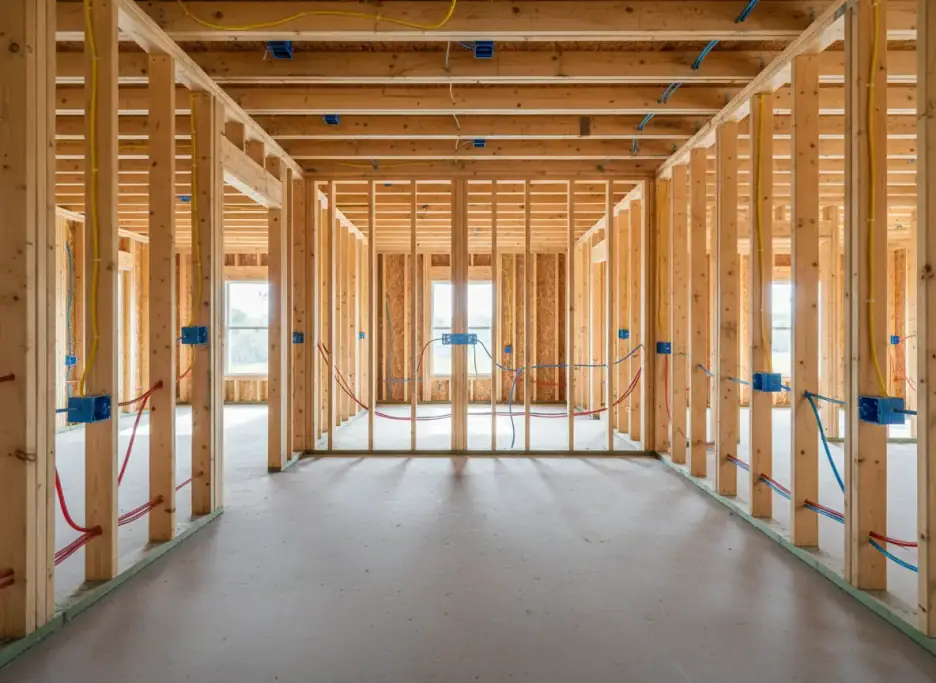
The second visit comes once the rough-in electrical, plumbing and HVAC are in place and the framed walls and roof structure are complete, but before insulation and drywall close everything in. The inspector examines the interior and exterior framing, the wiring, the plumbing and the roof, and checks that everything matches the blueprints.
This is the visit where a lot of small problems turn up, because so many trades have just passed through. A wire stapled where it should not be, a plumbing run notched through a framing member, an exhaust duct that dead-ends in an attic instead of venting outside: each of these is cheap to correct while the walls are open and a headache to chase afterward. Fixing something at this stage often means one worker, one afternoon and a re-check. Fixing it after paint and flooring is a different order of problem.
Alert publishes a pre-sheetrock phase sample report on its website, which is worth a look if you want to see the level of detail before you commit. Its format, with photographs tied to each finding, mirrors what you receive on your own build.
Phase III: the final walkthrough
The last phase is a final walkthrough that addresses the items listed in the home inspection report. By now the house looks finished, and the walkthrough confirms what was corrected from the earlier visits and picks up anything new that surfaced during finishing: trim, paint, fixtures, appliances, grading and everything else the final trades touched.
A new home inspection report also does something an ordinary resale report usually does not. It identifies the sizing, spacing, materials and location of the water heaters, HVAC equipment, water lines, panel boxes and plumbing clean-outs. In practical terms, that is a map of your house. Five years from now, when a plumber asks where the clean-out is or an electrician needs the panel schedule, you will have the answer in a document you already own.
Working around the builder's schedule
Construction moves quickly, and the windows between stages can be short. A few habits keep the phases from being missed:
- Tell the builder's office early that you will have independent phase inspections, and ask who to contact for stage notices.
- Book your inspection date as soon as you hear the stage is near, since the pour or the insulation crew will not wait.
- Ask for access in writing, including the site rules the builder expects visitors to follow.
Handing the findings to the builder
Findings are most useful when the builder can act on them quickly and clearly. A Google reviewer who had Darren Lee inspect a new construction home said the report was detailed with pictures and even quoted the codes so the builder would know why he would need to correct some issues. That is the standard worth asking for: specific locations, a photograph and the reason for each item. Send the list to your builder's representative in writing, keep a copy and track what gets corrected.
If you are building in Parker County or the surrounding area, the new home phased inspection page under Services walks through all three phases in more detail. Call Alert Home Inspections at (817) 999-4162 to line up the first visit before the foundation work begins.
Alert Home Inspections, (817) 999-4162
Call (817) 999-4162More articles
What Happens During a Texas Home Inspection
Inspection day follows a set order, and knowing it ahead of time makes the whole process easier to follow.
Your One-Year Builder Warranty and the Inspection
A new house spends its first year drying, settling and showing which trades did careful work.